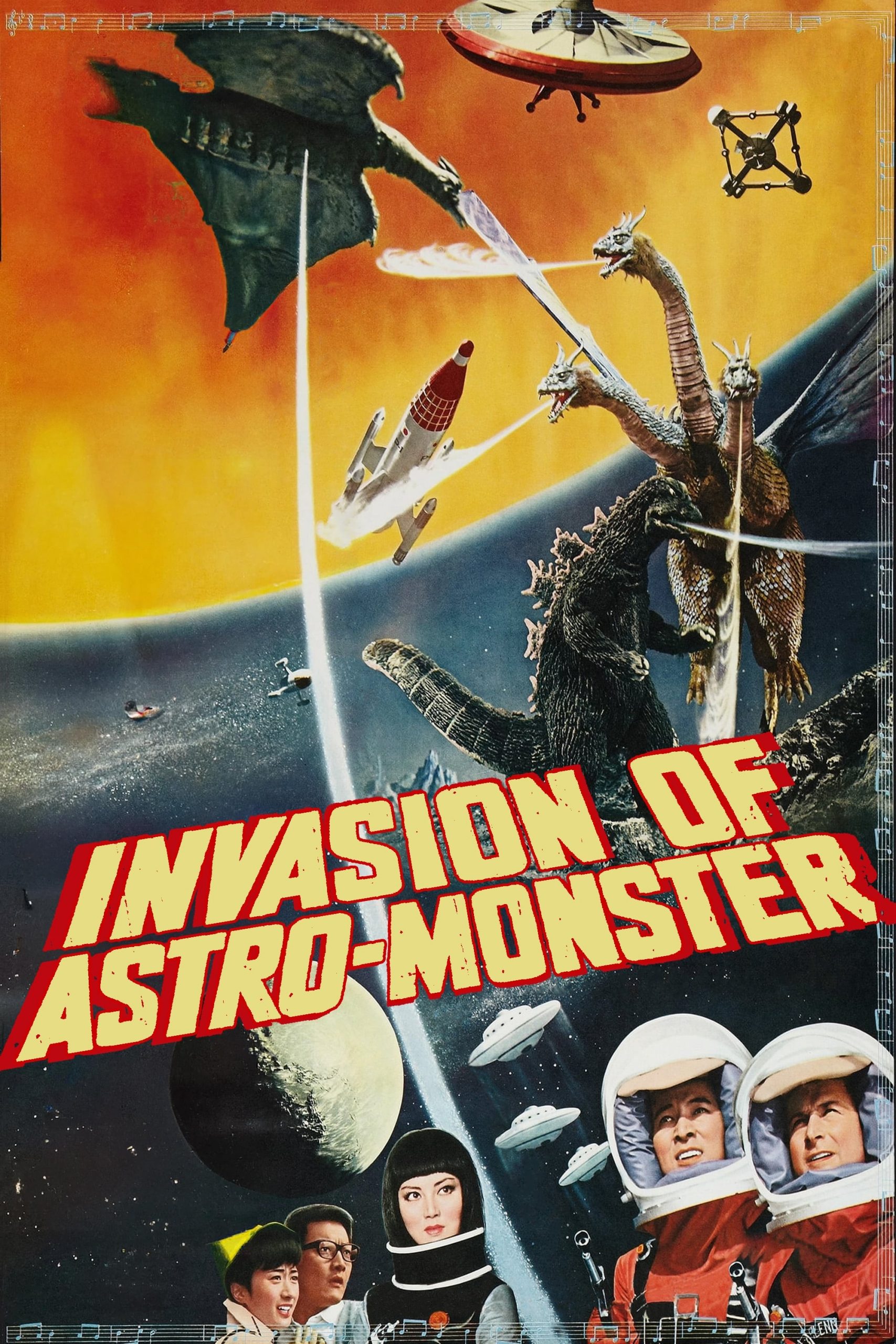
Invasion of the Astro monster is an interesting movie for me to cover. In so many ways, it fits a niche that I love that is so rarely met, the astro-futurism of early Star Trek paired with giant monsters, all paired with a suave, Captain Kirk-esque protagonist who little kid me swooned over ever chance she got. Yet, there is an uncomfortable air of misogyny that acts as a recurrent, and uncomfortable recurrance in the film. This feels particularly strange coming from Ghidorah, the Three-headed monster which was shockingly progressive on gender for its time. Perhaps it is because of its attachment to astro futurism which itself has an unfortunate history of sexism that causes this tendancy, or maybe its just a sign of the times showing itself more strongly than the previous film had, but in any event, it feels dated, such as a conversation between two women whose main point of connection is that one woman's accomplished astronaut brother is the topic of discussion. The women know each other only because that same woman is dating an inventor who recently sold a toy for $100,000 to the other woman's employersa. Ultimately, though, I love this movie, regardless of the aspects which have aged poorly, and I think that this connection I have to the movie will remain irrespective of the tropes which it relies upon.
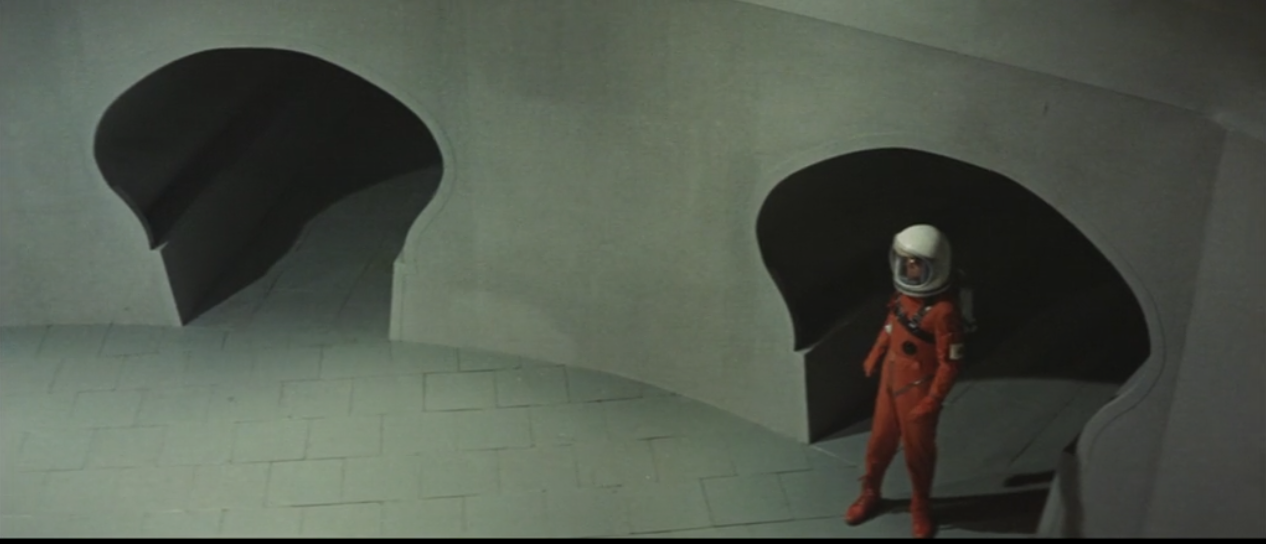
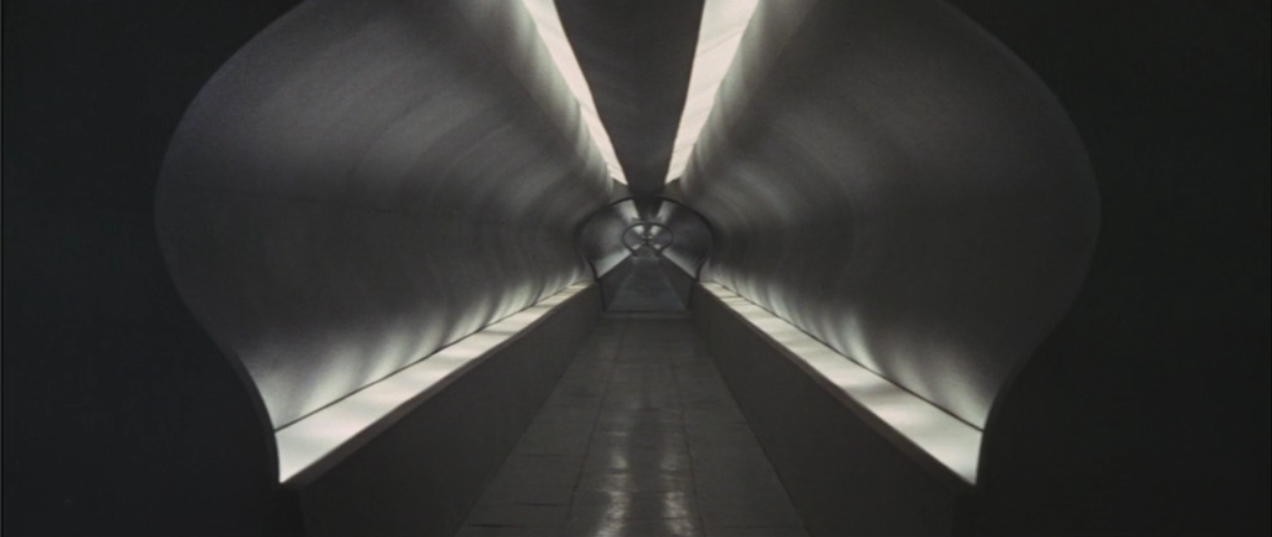
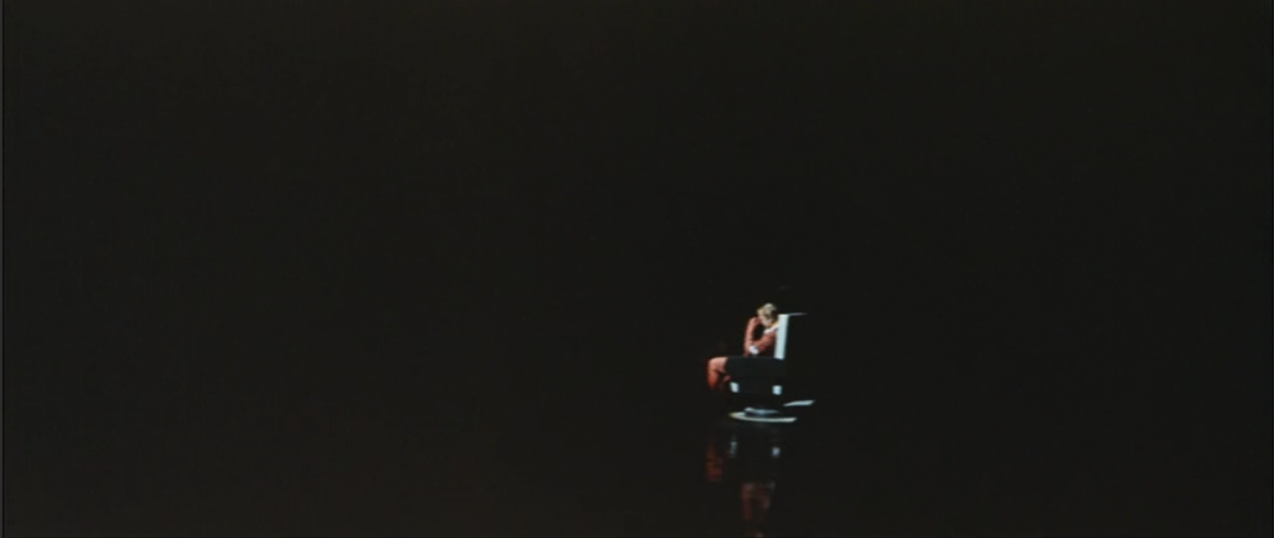
Central to my love of this movie is the fantastic set design, which looks like it jumped right off of the pages of a flash gordon comic strip, and characters that would feel at home in the kinds of stories that inspired early trek. Starring two astronauts, Kazu Fuji, and his american partner Glenn, the narrative centers around the landing and exploration of a mysterious "planet X", the first instance of this planet being used in the Godzilla franchise as the generic alien world that the bad guy aliens come from (in this case, the Xiliens, another recurrent villain of the Godzilla franchise). Every scene which involves the Xiliens is an absolute joy to watch, both for the unintended comedy of much of the dialogue as paired with unconvincing special effects which ooze charm, to the robotic, but honestly chilling performance of the actors playing the Xiliens themselves. There's also a surreal quality to the Xilien architecture that is strangely impressive, with a beautiful symmetry which gives way to empty voids, which only moments later are revealed to be inhabited by the goofball Xiliens within a set that would not look out of place in Dr. Evil's lair. Like, some of the shots I will provide below would not feel out of place in some Kubrickian arthouse film, yet exist within this campy scifi romp from 1965 which features Godzilla doing the contemporanious equivalient of hitting the griddy.
Returning again to the protagonists, Glenn (played by American actor Nick Adams), and Fuji (played by Godzilla veteran Akira Takarada) are representations of global cooperation; the smooth-talking, sexy American astronaut paired with the cool, intelligent Japanese astronaut calls upon the popular image which both nations presented themselves as within cold-war era cinema. These two play off of each other well, having shockingly good chemistry considering they were both speaking different languages during filming. Frequently, Glenn and Fuji bicker back and forth like an old married couple, making jabs and jokes at each other in a way that feels natural, like they had truly known each other for years. The effortless charisma of Adams paired nicely with the seriousness of Takarada's performance, making a duo that keeps the movie's plot moving comfortably.
Having met with the Xiliens, Glenn and Fuji are shown an attack by the so-called "Monster X", who as it turns out, as King Ghidorah. The Xiliens then offer the use of Godzilla and Rodan to defend Planet X from Ghidorah in exchange for a super drug that would cure all illness in humans. This deal, which appears too good to be true, is immediately accepted by the humans back on earth, who see the exchange to be overwhelmingly attractive for obvious reasons. Still, it is strange that no one, save our two astronaut leads, seems to question the honesty of the Xiliens. This then leads to the fusing of the two main plots, the inventor and the astronaut, wherein the employer of the aforementioned woman is revealed too to be the Xiliens.
The interworking of the two halves of the plot works well, and makes for an entertaining story, moreso than most of the movies in the Showa era (as much as I love them). Its here that Invasion of the Astro Monster stands out as particularly good, as the plot itself is interesting, and if you're willing to look past the unintentionally funny moments, genuinely exciting at times. Yet even in singing the praises of the plot, Nick Adam's performance and character are by far my favorite parts of this movie. Sure, I admit that Glenn was an early childhood crush of mine, but even in considering my own nostalgic affection for him, I feel that he is a genuinely interesting character, one who is a joy to watch, often bringing the funniest moments in the movie. He is consistently caught between being skeptical of the Xiliens, and unbearably horny for a Xilien woman. This brings back the aforementioned sexism, but we will get more into that soon, as first I need to talk about the monsters themselves, as the most famous part of this movie is also one of the single most ridiculous moments in the Godzilla franchise.
Largely a visual continuation of Ghidorah, the Three Headed Monster, the kaiju scenes from Invasion of the Astro Monster are impressive for the time, and entertaining throughout. Godzilla largely retains his design from the previous movie, with some redesigns in the head because of the reuse of the previous suit for Ultraman, and as such, has all of the same benefits of that design, appearing threatening, but not so threatening that he is unable to act as the hero. Ghidorah and Rodan too mainain their previous designs, and taken all together, which monster behaves and functions similarly to their roles in Ghidorah the Three Headed monster (although Godzilla and Rodan are not firmly allies, and other than a momentary instance of mind control, both act as the unambiguous good guys). It is this their roles as the good monsters that affords Godzilla the opportunity to perform a dance that is now inextricably linked to the character, with its original fame lost to Godzillas.
You see, this dance did not originate from Godzilla. In fact, prior to this movie, it was an extremely popular dance/pose in Japan due to the manga Osomatsu-kun, and subsequent anime, in which this pose was made. Thus, in the 1960s in Japan, it was a popular fad to strike the so-called shē pose (sometimes called "sheeh"). It is for this reason that either special effects supervisor Eiji Tsuburaya and/or actor Yoshio Tsuchiya depending on who is telling the story, chose to include the dance in Invasion of the Astro Monster (Ryfle, 1998). To give a modern example, as alluded to earlier, this would be like if in the latest Godzilla movie in the Monsterverse, Godzilla beats a monster and then decides to hit the griddy. Personally, I find this fact incredibly funny, and it enhances the movie greatly for me, as I cannot think of something funnier than Godzilla hitting the griddy after kicking Kong's ass.
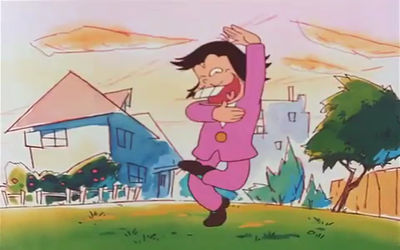
I feel the need to mention all of this because, despite the film being genuinely good in my opinion, its legacy is Godzillas victory dance, and despite my love of the film, I don't mind this. The dance represents much of why I love the cheesy quality of much of the showa era; its shamelessly fun in a way that so many movies are scared to be. It seems to me that movies and fiction in general tend to either choose to be serious, or silly, without considering the ways that sillyness can enhance an otherwise serious story. One of my favorite and only modern examples is the Metal Gear Solid series, known in equal measure for its goofiness and its seriousness. Genuine character writing paired with the sort of campy story telling that so much of modern fiction is missing. This is something that the Showa series films understood exceptionally well for the most part; something can be serious and tell an interesting story while also being silly, and its this that I love about Invasion of the Astro Monster most.
That being said, the movie is sexist, and exceptionally so. Female characters in Invasion of the Astro Monster are simply characterized, and defined exclusively in their relation to men. This is particularly disappointing as many of the women characters of Ghidorah the Three Headed monster are the best parts of that movie, and the Godzilla franchise as a whole is known for some fantastically written and performed women, even in its earliest of days. Although not what I would call a feminist depiction, the complexity of the very first important woman in a Godzilla movie, Emiko from the original, is memorable and interesting. Indeed, it is harder to find poor quality female characters in the Godzilla series than it is to find at least decent ones, yet in Invasion of the Astro Monster, women are tertiary to the interests of men, and the interests of monster. In this way, Invasion of the Astro Monster is similar to King Kong V.S. Godzilla in that it bears the mark of its age through its problematic aspects, yet unlike King Kong V.S. Godzilla, I find myself ranking Invasion as one of my all time favorites. So much so, that I almost want to take a feminist reading to the way that the manipulated Xilien woman fighting against her programming due to her developing feelings for Glenn, the human she was meant to manipulate, is humanized in the narrative as a victim of male abuse. But, I think this is a bit of a stretch, even if it makes the movie better to think of it in these terms.
Ultimatley, Invasion of the Astro Monster is a fantastic movie, and save some poorly aged aspects, represents everything I love about the showa era. In a lot of ways, it is the quintessential showa film, acting as the platonic ideal of this era of the Godzilla franchise, as if you like this movie, you surely will like the rest of the showa era, and if you don't like this movie, you won't. Although it stands out as unique in many aspects, especially its astro futurism, its success made much of its iconography ubiquitous in the franchise going forward, and I do not mind this at all. Every time I watch this movie I'm smiling ear to ear, and I do not imagine this will change any time soon. If you have the opporunity, give this movie a shot, and see if it makes you as happy as it makes me!
References
Ryfle, Steve (1998). Japan's Favorite Mon-Star: The Unauthorized Biography of "The Big G". ECW Press. ISBN 1-55022-348-8.